Lufi logo

Live engine data, plugged straight in

Lufi — OBD2 Gauge Displays & More

Your dashboard was designed to tell you as little as possible. A Lufi gauge asks your engine control unit the questions the factory cluster never shows you, and puts the answers where you can read them at a glance.

Drag across the screen to wake it

The lineup

Our Best Products

Four generations of Lufi gauge, plus the bracket and the shift light that go with them. Tap any product to check the current price.

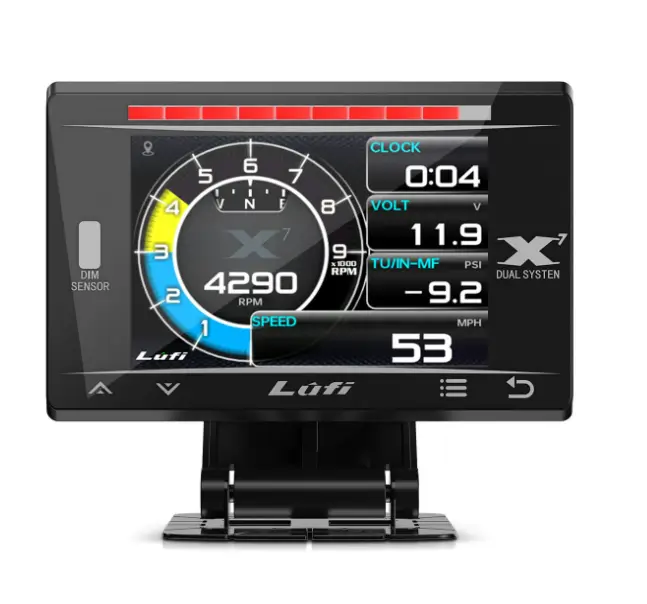
LUFI X7 OBD2 Gauge Display – Fuel Car Companion, Multi-Function & Overload Protection

LUFI X7 OBD2 Gauge Display – Fuel Car Companion, Multi-Function & Overload Protection

The X7 is the fourth-generation Lufi gauge and the largest of the line, built around a 3.5-inch colour screen that stays readable in daylight. It runs OBD and GPS together, so alongside coolant temperature, boost, oil temperature and voltage you also get a gyroscope, a G-force meter and satellite speed. Seven display layouts let you decide exactly which values sit in front of you, and a maintenance-mileage reminder keeps service intervals in view.

Check Price
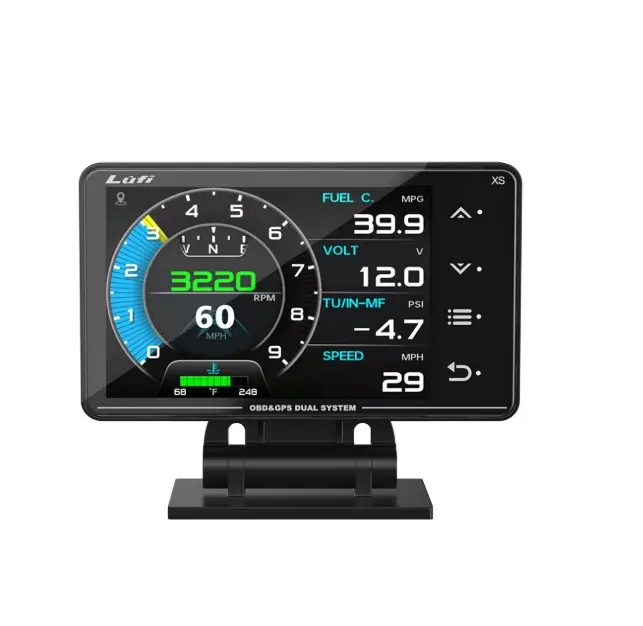
LUFI Xs OBD2 Gauge Display – Fuel Car Companion, Multi-Function & Overload Protection

LUFI Xs OBD2 Gauge Display – Fuel Car Companion, Multi-Function & Overload Protection

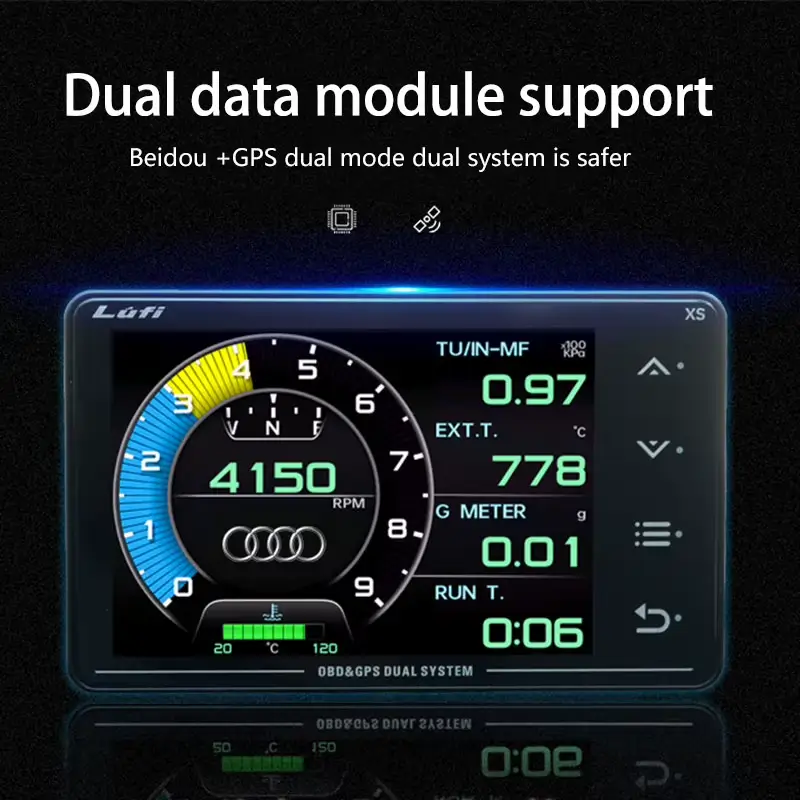
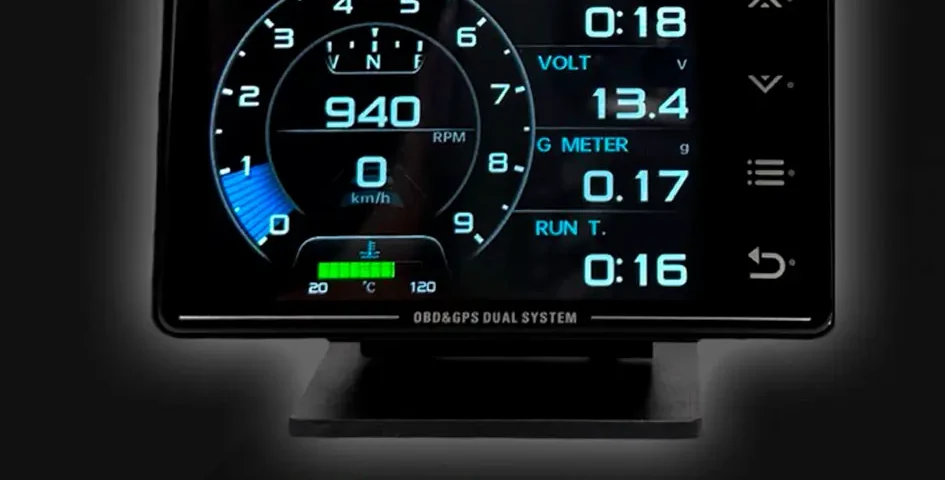
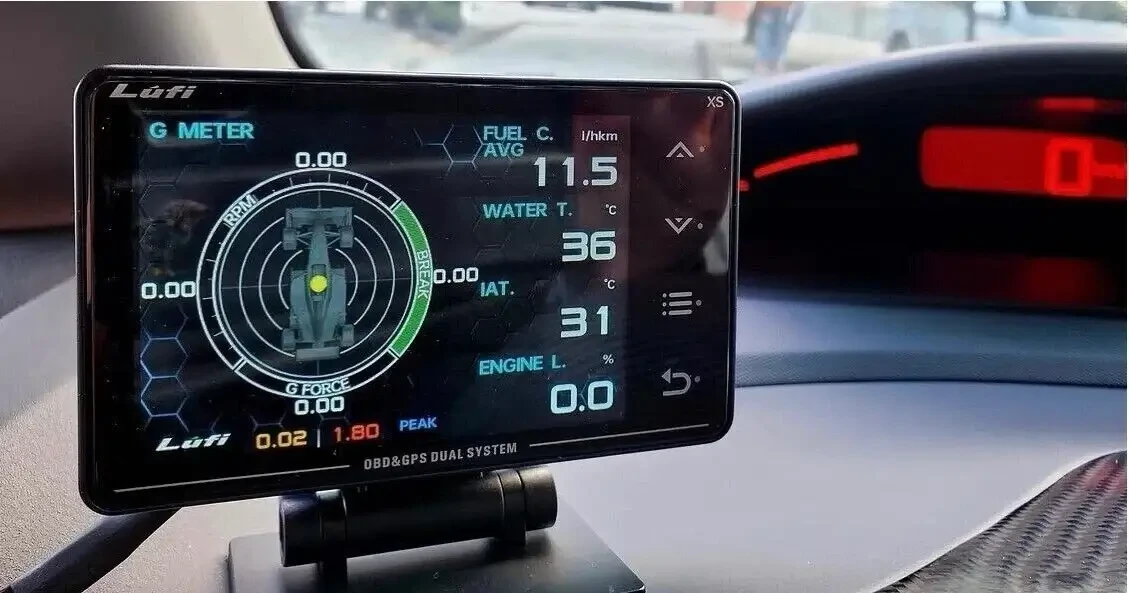
The Xs is the third-generation gauge, the one that brought the dual OBD and GPS system, a gyroscope and a G-force meter to the line. Its touch keys sit on the right-hand edge of the face rather than behind the housing, so changing layouts takes one finger and no fumbling in the dark. Seven screens cover everything from a full tachometer to a compass and a lean-angle readout.

Check Price
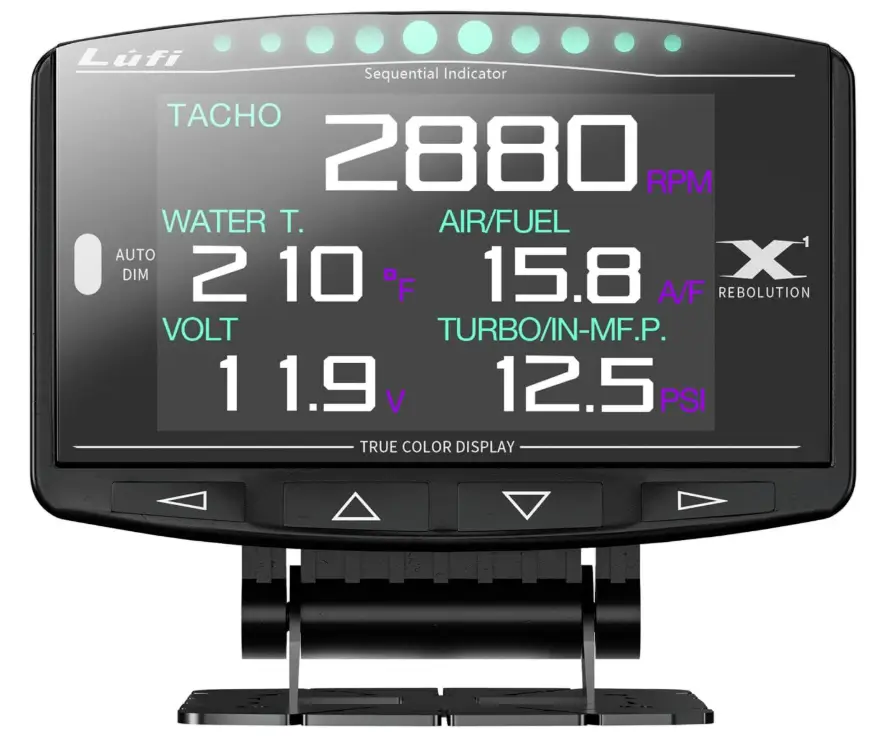
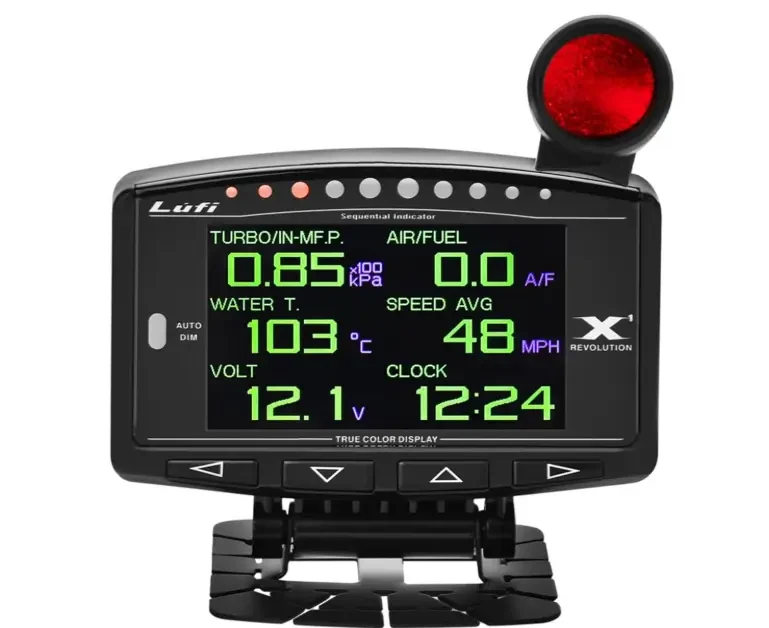
Lufi X1 Obd2 Gauge Display – Fuel Car Companion, Multi-Function & Overload Protection

Lufi X1 Obd2 Gauge Display – Fuel Car Companion, Multi-Function & Overload Protection

The X1 is the original Revolution gauge and the most compact body in the line, which makes it the easy answer for a crowded dashboard. It reads the same core ECU data as its bigger siblings — coolant and oil temperature, turbo pressure, battery voltage, RPM and speed — and it reads and clears fault codes on its own. Three display modes include an inverted layout and a head-up reflection for windscreen projection.

Check Price
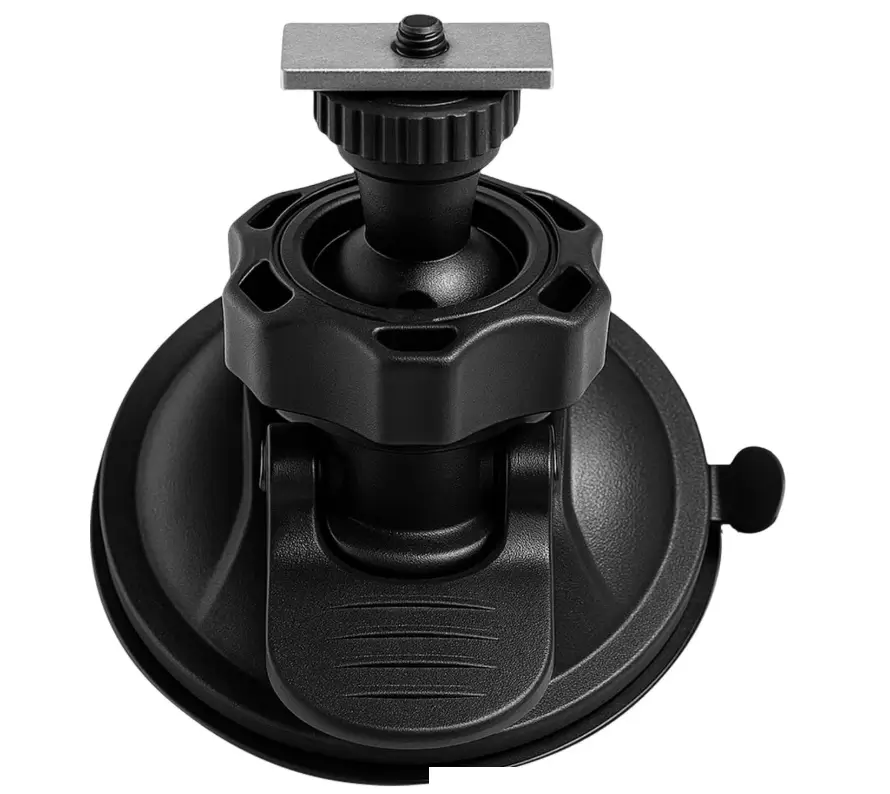
Lufi x7/xf Double-Sided Adhesive Suction Cup Bracket, Suitable x7/xf Obd2 Gauge

Lufi x7/xf Double-Sided Adhesive Suction Cup Bracket, Suitable x7/xf Obd2 Gauge

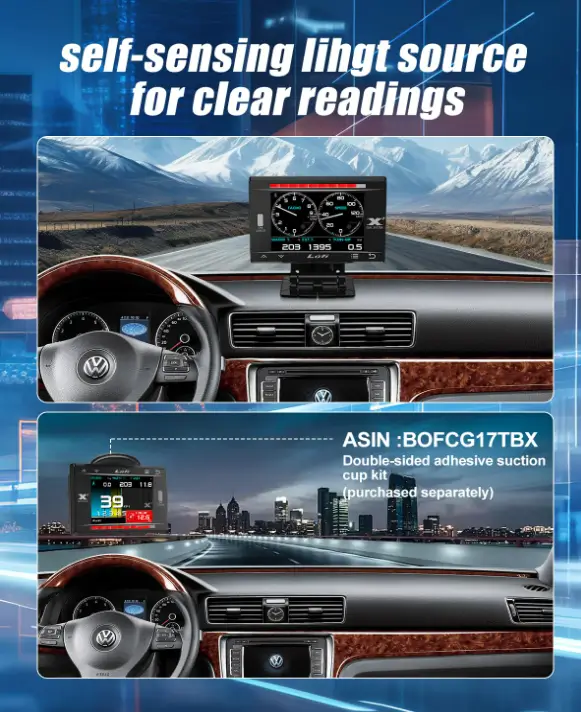
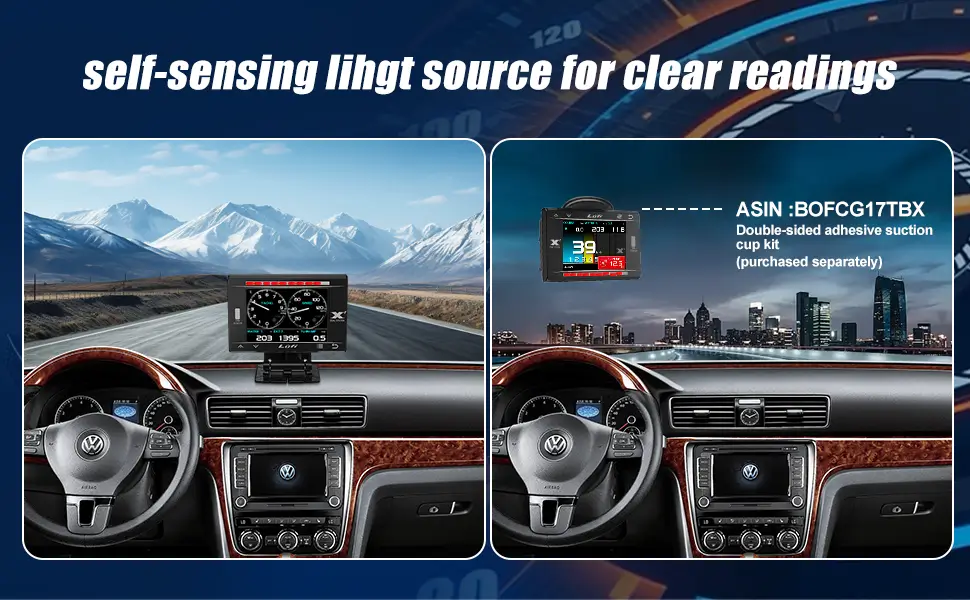
A double-sided adhesive suction cup bracket built for the x7 and xf, for drivers who would rather not stick anything permanent to the dashboard. The ball joint swivels and the arm adjusts for height, so you set the viewing angle once and leave it there. It lifts the display toward the base of the windscreen, where your eyes already travel, and it is sold on its own rather than bundled with the gauges.

Check Price
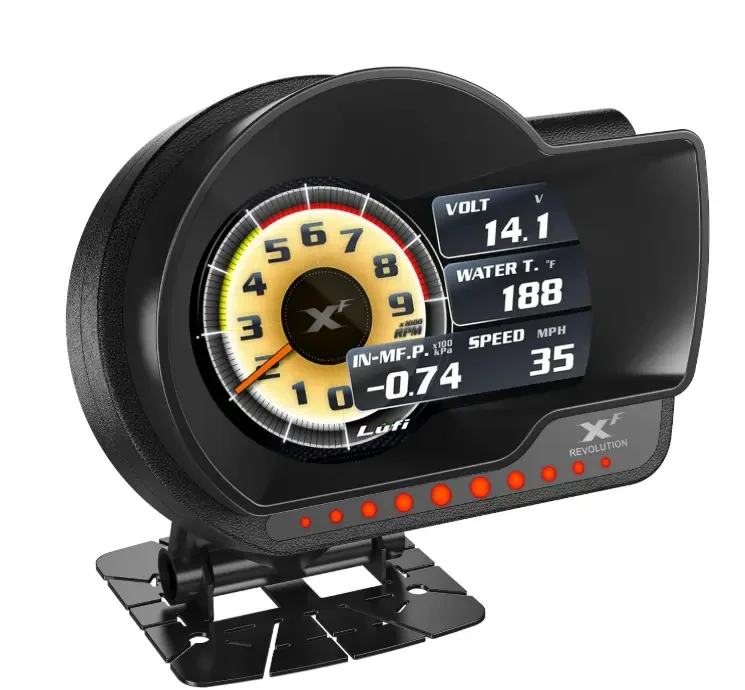
Lufi XF OBD2 Gauge Display – Fuel Car Companion, Multi-Function & Overload Protection

Lufi XF OBD2 Gauge Display – Fuel Car Companion, Multi-Function & Overload Protection

The XF is the second-generation gauge, recognisable by the sun hood that shades the face so the numbers stay legible in bright daylight. An ambient light sensor dims the screen automatically after dark, and the buttons moved to the back of the housing to keep the front clean. It tracks the same live ECU data — water temperature, boost, exhaust temperature, voltage, air-fuel ratio — and raises a pop-up and a beep on any threshold you set.

Check Price
Lufi Shift Light (RED Light), Alarm Light Accessory Xf Obd2 Gauge X1 Gauges Display, Double Sided Tape Fix

Lufi Shift Light (RED Light), Alarm Light Accessory Xf Obd2 Gauge X1 Gauges Display, Double Sided Tape Fix

A red LED shift and alarm light that pairs with the Xf and X1 gauges and mounts with double-sided tape wherever it falls in your line of sight. It fires at the RPM you programme on the gauge, so you can time an upshift without looking away from the road. The lens is polycarbonate and the housing is sealed against moisture, which matters if it lives near a vent or a window.

Check Price

Four generations. One connector.

Compare the X1, Xf, Xs and X7 side by side and check the current price on each.

See the Full Range

What the factory cluster leaves out

Driving Blind, Solved

Four things drivers find out too late, and what a Lufi gauge does about each of them.

The problem

The temperature warning light comes on when it is already over.

Our fix

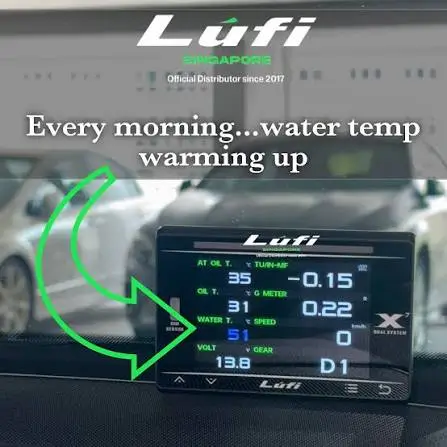
The gauge shows coolant temperature as a live number and beeps at the threshold you set, so you get minutes of warning instead of a puff of steam.

The problem

A tired battery or alternator gives no notice at all.

Our fix

Battery voltage sits on the screen permanently. Set a floor — 11.5 V, say — and the gauge tells you the charging system is fading while you can still choose when to fix it.

The problem

A check-engine light tells you something is wrong, and nothing else.

Our fix

The gauge reads the fault code itself and clears it once you have dealt with it, so you know what the car is complaining about before you book anything.

The problem

Boost, oil temperature and exhaust temperature are invisible on a standard dash.

Our fix

Choose which values occupy which slot on the display. Turbo pressure, oil and exhaust temperature, air-fuel ratio and engine load all sit there in real time — whatever your car reports.

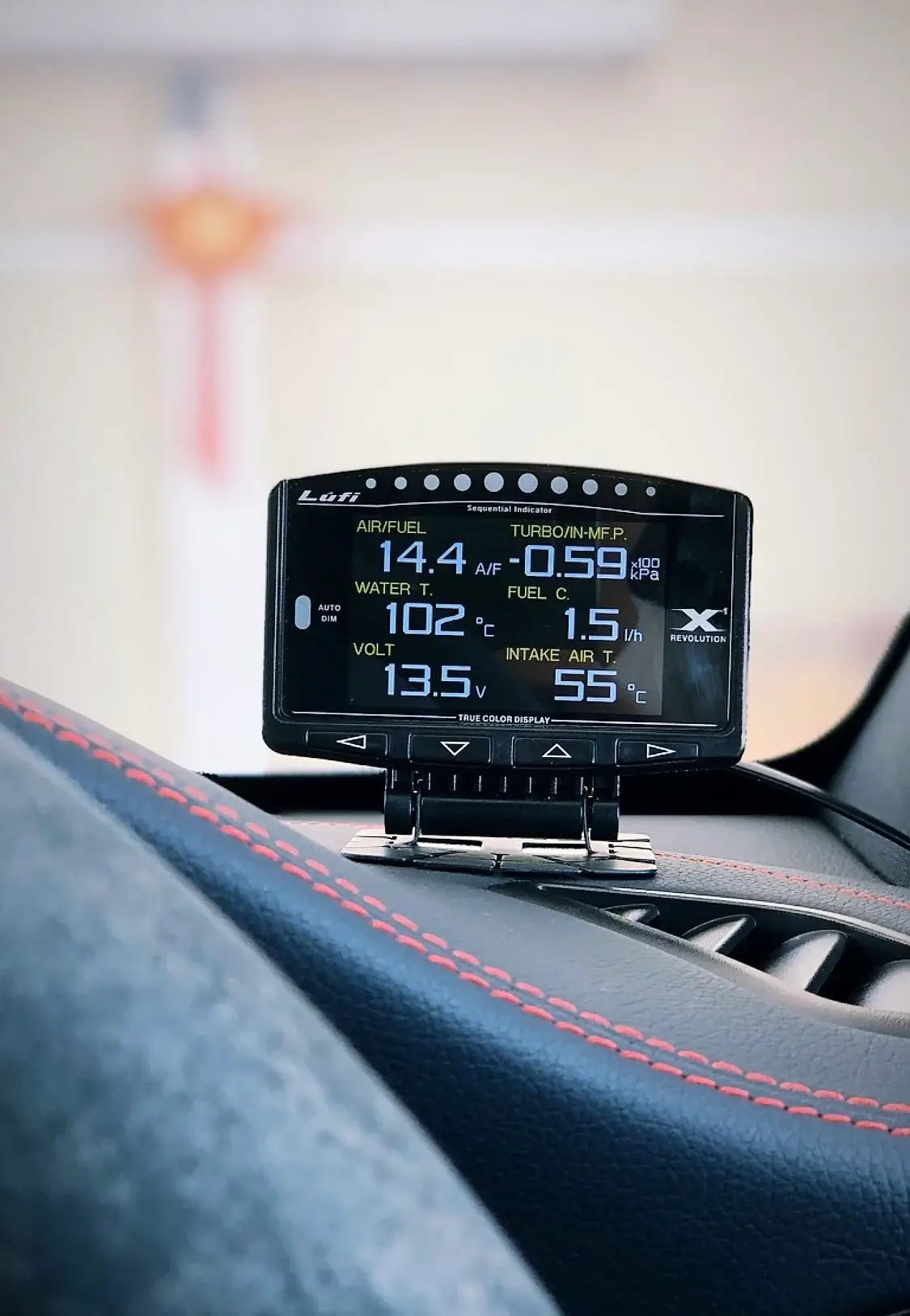
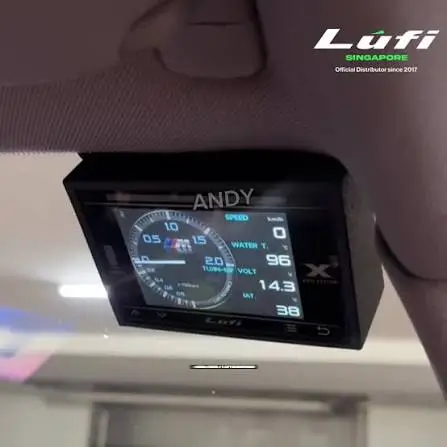
A Lufi gauge mounted on a car dashboard showing air-fuel ratio, turbo pressure, water temperature and battery voltage

Who we are

About Us

Lufi makes one kind of thing and has spent four generations making it better: a small screen that shows a driver what the car already knows. Every modern engine control unit runs a continuous internal conversation about temperature, pressure, load, timing and fuel. Almost none of it reaches the dashboard. The factory cluster gives you a speedometer, a tachometer, a fuel gauge and a set of warning lights that switch on at the point where the problem has already happened. Everything in between — the useful part — stays hidden behind a sixteen-pin connector under the steering column.

Our gauges plug into that connector and ask for it. The X1 was the first, small enough to sit on a crowded dash and honest about what it could show. The Xf added a sun hood and an ambient light sensor, because a screen you cannot read at noon is not a gauge. The Xs brought in a second data source entirely — satellite positioning alongside the engine bus — and with it a gyroscope, a G-force meter and a compass. The X7 took the whole idea onto a 3.5-inch colour screen with seven display layouts and a service-mileage reminder. Each generation kept what worked and fixed what owners complained about, which is why the older models are still in the range rather than discontinued.

We also build the unglamorous parts that decide whether a gauge gets used: a double-sided suction-cup bracket for drivers who will not glue anything to a dashboard, and a shift light that mounts with tape wherever your eyes already go. And we keep engineers on email. When a car buries gearbox temperature or oil pressure behind a manufacturer-specific parameter ID, they write a custom PID file for that car and send it back so you can load it onto the gauge. That is a strange thing for a hardware company to do at scale, and it is the part of the job we are proudest of.

Shop the Collection

Buyer guide

Find Your Lufi

Six ways drivers end up here. Find the one that sounds like you.

You have been stranded once already

You want coolant temperature and battery voltage on screen with an alarm behind them, and you want the box to be small enough that the dashboard still looks standard. The X1 is the compact answer; the Xf adds a sun hood if your car lives in bright light.

  • Lufi X1 Obd2 Gauge Display – Fuel Car Companion, Multi-Function & Overload Protection
  • Lufi XF OBD2 Gauge Display – Fuel Car Companion, Multi-Function & Overload Protection

Your dash is a glare trap

South-facing commute, light interior, a windscreen that throws everything back at you. The Xf was designed around exactly this — a hood over the face and an ambient sensor that dims the screen once it goes dark.

  • Lufi XF OBD2 Gauge Display – Fuel Car Companion, Multi-Function & Overload Protection

You go to track days

You want lean angle, G-force, a satellite-accurate speed and a 0-100 timer alongside the engine data, and you want to set warning limits before you go out. The Xs added the dual OBD and GPS system for this; the X7 gives you the same on a bigger screen.

  • LUFI Xs OBD2 Gauge Display – Fuel Car Companion, Multi-Function & Overload Protection
  • LUFI X7 OBD2 Gauge Display – Fuel Car Companion, Multi-Function & Overload Protection

You want everything on one screen

No compromises: the largest 3.5-inch colour display in the line, seven layouts to choose from, GPS and motion sensing, custom PID support and a maintenance-mileage reminder that tells you when a service is due.

  • LUFI X7 OBD2 Gauge Display – Fuel Car Companion, Multi-Function & Overload Protection

You will not glue anything to your dashboard

Lease car, pristine interior, or you simply move between vehicles. The double-sided adhesive suction cup bracket holds an x7 or xf at the base of the windscreen and swivels to whatever angle reads best from the driver's seat.

  • Lufi x7/xf Double-Sided Adhesive Suction Cup Bracket, Suitable x7/xf Obd2 Gauge

You change gear by ear

A manual car and a rev limit you would rather not meet. The red LED shift light tapes wherever it sits in your peripheral vision and fires at the RPM you programme on an Xf or X1, so the upshift comes without a glance down.

  • Lufi Shift Light (RED Light), Alarm Light Accessory Xf Obd2 Gauge X1 Gauges Display, Double Sided Tape Fix

Our purpose

Our Mission

We think the gap between what a car knows and what it tells its driver is the most fixable problem in motoring. The sensors are already fitted. The measurements are already being taken, dozens of times a second. The control unit is already deciding what to do about them. The only missing piece is the last few centimetres — from the diagnostic port to a screen the driver can see — and that is the piece we build.

Our mission is to close that gap without asking anything of you. No splicing into looms, no drilling, no sensor kits, no workshop appointment. You plug a cable into a connector that is already there, and a minute later the car is telling you its coolant temperature, its boost, its voltage and its fault codes. The skill is not in the connection; it is in deciding which numbers matter, arranging them so they can be read at a glance at speed, and raising an alarm loud enough to interrupt a driver who was thinking about something else.

We measure success in problems that did not become breakdowns. An owner who saw the temperature climbing and pulled over. A charging fault caught while the car was still starting. A boost leak noticed because the number stopped matching what it had read for a year. None of that makes a dramatic story, which is the point — the best outcome of a good gauge is a completely ordinary journey.

“If the car knows, you should know.”

Everything Lufi builds comes back to that sentence. A warning light is a verdict delivered after the fact; a number you can watch is information you can act on. So here is the practical version, worth doing whatever gauge you own: spend a week noting what your engine's normal looks like — its usual coolant temperature in traffic, its usual voltage after a cold start, its usual boost at half throttle. Faults almost never announce themselves. They drift. Knowing your own baseline is what turns a drifting number into an early warning instead of a surprise.

Why us

Why Choose Us

Six reasons drivers pick a Lufi gauge over the alternatives.

Installation is one cable and a minute

We designed the whole product around a connector your car already has. The gauge plugs into the sixteen-pin diagnostic socket under the steering column — the same one a workshop uses — and powers up with the ignition. There is nothing to splice, nothing to drill, no sensor to fit into a coolant line, no earth to find. If you decide to move the gauge to another car, you unplug it and take it with you. We would rather you spent that hour driving.

The warning arrives while it is still useful

A factory temperature light is a verdict, not a warning: by the time it is lit the engine is already in trouble. We give you the number instead, and let you decide where the line is. Set your own ceiling for coolant temperature, exhaust temperature, turbo pressure and RPM, and a floor for voltage. Cross one and the screen throws a pop-up and the unit beeps. It is not subtle, deliberately — a driver concentrating on traffic should not have to notice a colour change.

You decide what the screen shows

No two drivers watch the same values. Somebody towing cares about gearbox and coolant temperature; somebody on a track cares about oil temperature and G-force; somebody nursing an old car cares about voltage above all. So we made the layout yours: pick which reading occupies which slot, change the colour of individual items so the critical one stands out, choose from three display modes on the X1 and Xf or seven on the Xs and X7, and put your car's marque logo on the start screen if you like.

It reads and clears fault codes

A check-engine light on its own tells you nothing you can act on. Our gauges read the diagnostic trouble codes directly from the control unit, so you find out what the car is actually complaining about before you decide whether it is a loose sensor connector or a garage appointment. Once the fault is dealt with, the gauge clears the code itself. For a lot of owners this function alone has paid for the device more than once.

Built to be read in real light

A gauge you cannot see is decoration. From the Xf onward every model has addressed this directly: a moulded sun hood that shades the face against overhead glare, and an ambient light sensor that dims the display automatically once it gets dark, so the screen does not burn into your night vision. The X7 puts all of that behind a 3.5-inch colour panel large enough to read without leaning forward. Daylight legibility is not a specification line for us; it is the whole point.

Engineers who answer specific questions

The generic diagnostic standard covers a lot, but not everything your car measures. Gearbox temperature, oil pressure on some engines, individual clutch temperatures on dual-clutch transmissions — these live behind manufacturer-specific parameter IDs. When an owner asks, our engineers build a custom PID file for that exact car and send it back by email, and the gauge lets you load it, name it, set its unit and attach a warning to it. We also keep firmware updatable on the unit, so an older gauge keeps gaining ground.

Your car already measures it.

See which model puts the readings you care about in front of you.

Check Availability
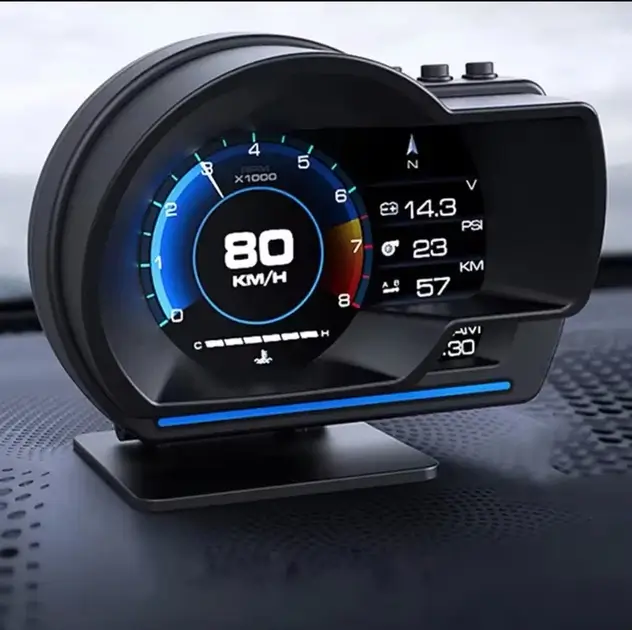
Close-up of a Lufi gauge display showing a speedometer dial at 80 km/h beside voltage, boost pressure and distance readouts

The difference

What Sets Us Apart

Plenty of devices will read a diagnostic port. What separates a Lufi gauge from a code reader is that it is designed to be looked at while driving. The layouts are built around glance-time rather than feature lists: large numerals for the values that change slowly and matter most, smaller fields for context, and a fixed position for every value so your eye learns where to look without reading labels. On the Xs and X7 there are seven of those layouts, and you decide which reading sits in which slot on each one — including item colours, so the number you care about most is the one that stands out.

The alarms are the second difference, and they are the reason most of our owners bought the thing. Set a ceiling for coolant temperature, exhaust temperature, turbo pressure or RPM, and a floor for battery voltage, and the gauge interrupts you with a pop-up on screen and an audible beep when a limit is crossed. That is a deliberately unsubtle design decision. A number that quietly goes red is a number a busy driver misses. Peak-value review then lets you check after the drive what the highest reading actually was, which is how a slow-developing problem gets caught before it becomes an expensive one.

The third difference is that we do not stop at the generic standard. Diagnostic parameters are only partly universal; a great deal of what a modern car measures — gearbox temperature, oil pressure on some engines, clutch temperatures on dual-clutch transmissions — lives behind manufacturer-specific parameter IDs. Our engineers write custom PID files for individual cars and send them by email, and the gauge lets you load them, name the field, choose the unit and, where the data allows, attach a warning threshold to it. Firmware on the unit is updatable too, so a gauge bought two years ago is not frozen at the feature set it shipped with.

Stop guessing what the engine is doing.

Live temperature, boost, voltage and fault codes, on a screen you can actually read.

View the Collection

Closer look

A Few Words About Our Best Products

LUFI X7 OBD2 Gauge Display – Fuel Car Companion, Multi-Function & Overload Protection

The X7 is the fourth-generation Lufi gauge and the largest of the line, built around a 3.5-inch colour screen that stays readable in daylight. It runs OBD and GPS together, so alongside coolant temperature, boost, oil temperature and voltage you also get a gyroscope, a G-force meter and satellite speed. Seven display layouts let you decide exactly which values sit in front of you, and a maintenance-mileage reminder keeps service intervals in view.

Check Price

LUFI Xs OBD2 Gauge Display – Fuel Car Companion, Multi-Function & Overload Protection

The Xs is the third-generation gauge, the one that brought the dual OBD and GPS system, a gyroscope and a G-force meter to the line. Its touch keys sit on the right-hand edge of the face rather than behind the housing, so changing layouts takes one finger and no fumbling in the dark. Seven screens cover everything from a full tachometer to a compass and a lean-angle readout.

Check Price

Lufi X1 Obd2 Gauge Display – Fuel Car Companion, Multi-Function & Overload Protection

The X1 is the original Revolution gauge and the most compact body in the line, which makes it the easy answer for a crowded dashboard. It reads the same core ECU data as its bigger siblings — coolant and oil temperature, turbo pressure, battery voltage, RPM and speed — and it reads and clears fault codes on its own. Three display modes include an inverted layout and a head-up reflection for windscreen projection.

Check Price

Lufi x7/xf Double-Sided Adhesive Suction Cup Bracket, Suitable x7/xf Obd2 Gauge

A double-sided adhesive suction cup bracket built for the x7 and xf, for drivers who would rather not stick anything permanent to the dashboard. The ball joint swivels and the arm adjusts for height, so you set the viewing angle once and leave it there. It lifts the display toward the base of the windscreen, where your eyes already travel, and it is sold on its own rather than bundled with the gauges.

Check Price
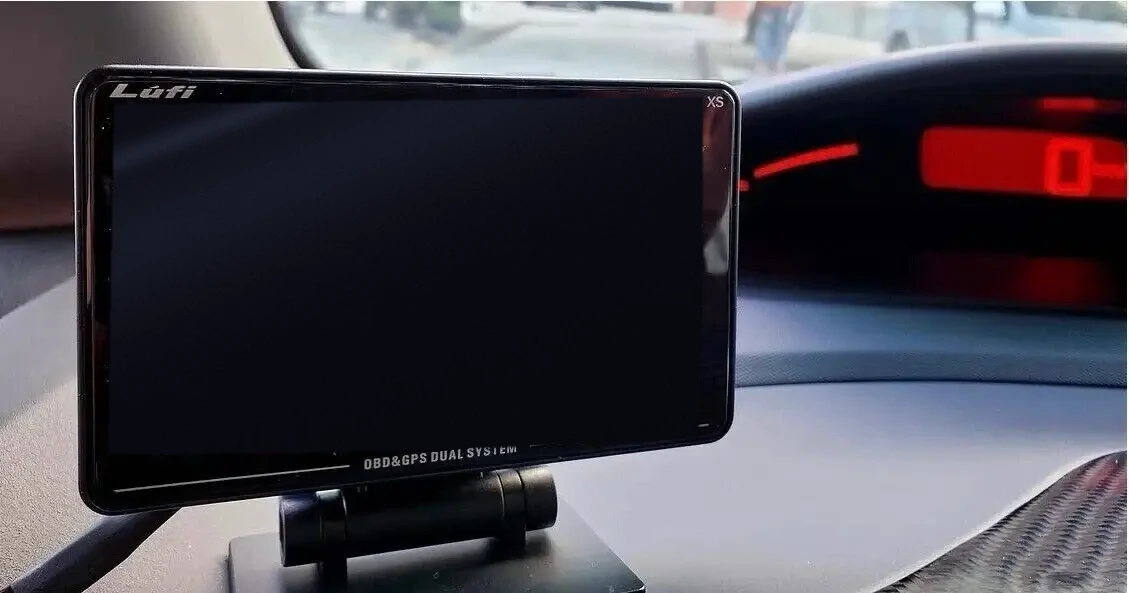
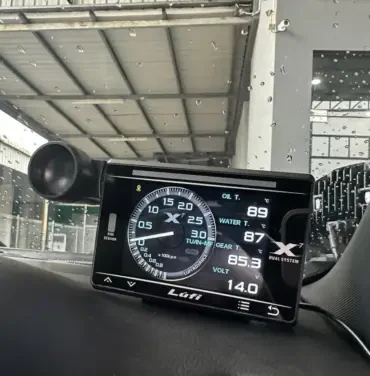
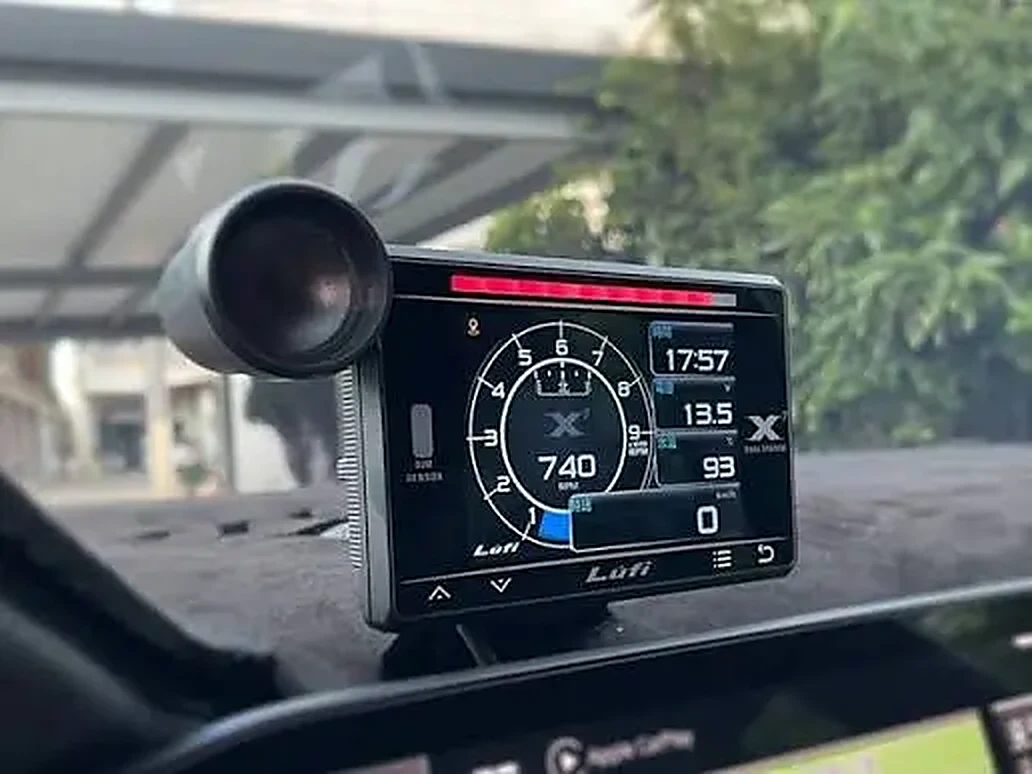
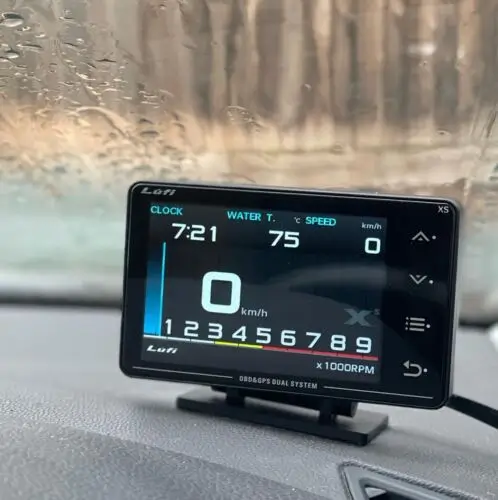
A Lufi Xs gauge on a car dashboard behind a rain-covered windscreen, showing clock, water temperature and speed

Peace of mind

Buy With Confidence

Straightforward reasons this is a low-risk purchase.

Nothing permanent happens to your car

The gauge uses a port that is already there and a bracket or suction mount you can remove. No cut wires, no drilled holes, no trace left behind if you sell the car or move the gauge to the next one.

Honest compatibility, stated up front

Combustion and hybrid cars: American brands from 2008 onward, Japanese and European brands from 2005 onward. Not compatible with pure electric vehicles. Which individual readings appear depends on the sensors your car actually has.

Four models, one decision

The range is deliberately small and clearly separated by screen size, daylight legibility and whether you want GPS and motion data. There is no confusing overlap to decode and no pressure to buy the largest one.

A real support route

Official regional distributors operate in Malaysia, Australia, Singapore and Thailand alongside direct international sales, and the engineering mailbox handles the technical questions that a general support desk cannot.

In their words

What Buyers Often Appreciate

Themes that come up again and again in owner feedback, in our own words.

The warning that arrived in time

The single most repeated story is a temperature or voltage alarm going off minutes before something would have gone badly wrong — enough warning to pull over, or to reach a workshop under the car's own power rather than on a truck.

Genuinely plug-and-play

Owners frequently mention being surprised at how little there was to do: find the port, plug in the cable, route it along a trim line, and the gauge is already reading. Several note it took less time than unpacking it.

Making the display their own

A recurring theme is time spent happily rearranging which values go where, recolouring the one that matters and picking a favourite layout. People tend to settle on a screen quite different from the default.

Clearing a code without a garage visit

Being able to see what a check-engine light actually means, and to clear it once the cause is dealt with, comes up constantly as the function that turned out to be more useful than expected.

Learning the car's normal

Drivers often describe watching the numbers for a few weeks and building a sense of what their engine usually does — which then makes an unusual reading obvious rather than ambiguous.

Support that answered the awkward question

Feedback regularly mentions writing in about a value the car would not show and receiving a configuration file built for that specific model, which is not the response people expect from a device in this price bracket.

Good to know

Frequently Asked Questions

Is Lufi a good brand? +

Lufi has spent four product generations doing one thing: making a small screen that shows a driver what the engine control unit already knows. The X1 started it, the Xf added a sun hood and an ambient light sensor, the Xs brought in GPS, a gyroscope and a G-force meter, and the X7 scaled it all onto a 3.5-inch colour display. The line has grown steadily rather than being replaced, firmware is updatable on the unit, and the brand's own engineers will build a custom PID file for a specific car when the generic OBD2 set does not cover a value you need. Alongside the gauges, Lufi supplies the parts that make them usable day to day — suction-cup brackets and shift lights — and works through official regional distributors in Malaysia, Australia, Singapore and Thailand as well as selling internationally.

What makes your products better than competitors'? +

Three things, and none of them are marketing. First, the threshold alarm actually interrupts you: when coolant temperature, RPM, voltage, turbo pressure, speed, exhaust temperature or inclination crosses a limit you set, the screen throws a pop-up and the unit beeps, rather than quietly changing a number you were not looking at. Second, customisation goes deeper than colour — you choose which value sits in which slot on which of the display layouts, and on the Xs and X7 you get seven of those layouts instead of three. Third, the support is engineering-level: if your car hides gearbox temperature or oil pressure behind a manufacturer-specific PID, you can email for a custom PID file and load it onto the gauge yourself.

How do I choose the right product for my needs? +

Start with the space you have and the data you want. If the dashboard is crowded and you mainly want temperature, boost and voltage in view, the X1 is the smallest body in the line and does exactly that. If your car sees a lot of daylight, the Xf's sun hood and automatic dimming make the difference between reading the screen and squinting at it. If you want lean angle, G-force and a satellite-accurate speed alongside the ECU data — track days, off-road, spirited driving — the Xs adds the dual OBD and GPS system. The X7 is for when you want all of that on the largest screen with seven layouts and a service-mileage reminder. Add the suction-cup bracket if you would rather not fix anything permanently to the dash, and a shift light if you change gear by ear today.

Do you offer product warranties? +

Every unit is covered against manufacturing defects, and the exact terms depend on where you bought it: the official regional distributors run their own warranty registration and claim forms, while units bought internationally are handled directly. Keep your proof of purchase — it is the one thing every claim route asks for. If something goes wrong, the fastest path is usually the engineering support mailbox, because a surprising share of reported faults turn out to be a display setting, a firmware version or a PID configuration rather than hardware.

Are your products environmentally friendly? +

A Lufi gauge is a small, low-power device that draws from the diagnostic port and adds nothing to the car's emissions. Its more useful environmental contribution is indirect: the display shows instant and average fuel consumption, engine load and throttle position, and drivers who can see those numbers tend to drive more gently and burn less fuel. Catching a cooling or charging problem early also keeps a car on the road longer, which beats replacing parts — or the car — sooner than necessary. The housings are moulded plastic and the units are built to be moved between vehicles rather than discarded.

Will my car show every reading on the list? +

No, and any brand that tells you otherwise is guessing. The gauge does not measure anything itself — it asks your engine control unit for values, and it can only display what your particular car actually reports. Coolant temperature, RPM, speed, battery voltage, engine load and fuel consumption are near-universal. Oil temperature, oil pressure, exhaust temperature, gearbox temperature and air-fuel ratio depend entirely on the sensors fitted and on whether the manufacturer exposes them over the diagnostic port. When a value exists in the car but sits behind a manufacturer-specific parameter ID, a custom PID file from the brand's engineers can often bring it onto the screen.

What is the difference between the X1, Xf, Xs and X7? +

They are four generations of the same idea, and they all install the same way. The X1 is the first and smallest, with buttons on the front face and three display modes including an inverted layout and a head-up reflection. The Xf is the second generation: a sun hood over the screen, an ambient light sensor that dims it at night, and the buttons moved around to the back for a cleaner face. The Xs is the third and the first with the dual OBD and GPS system — gyroscope, G-force meter, compass, seven display layouts and touch keys on the right-hand edge. The X7 is the fourth: the largest 3.5-inch colour screen, the same GPS and motion sensing, seven layouts, custom PID support and a maintenance-mileage reminder. Core engine monitoring is common to all four; what you pay more for is screen size, daylight legibility and the GPS and motion data.

Will it work on an electric car? +

No. These gauges are built around combustion-engine data — coolant temperature, RPM, turbo pressure, exhaust temperature, air-fuel ratio — and they are not compatible with pure electric vehicles. For combustion and hybrid cars the rule of thumb is: American brands from 2008 onward, Japanese and European brands from 2005 onward, since that is when the diagnostic standard settled into a form the gauge can read reliably. Older cars, and a handful of models with unusual control units, may connect but report fewer values.

Ready to see what your car knows?

Browse the full range of gauges, brackets and shift lights in the official store.

Shop Now